They Called Her the Mother of the Internet — She Said That’s Not a Title Anyone Can Earn
How an algorithm written in a single weekend unlocked Ethernet across buildings and campus networks

HISTORY
They Called Her the Mother of the Internet — She Said That’s Not a Title Anyone Can Earn
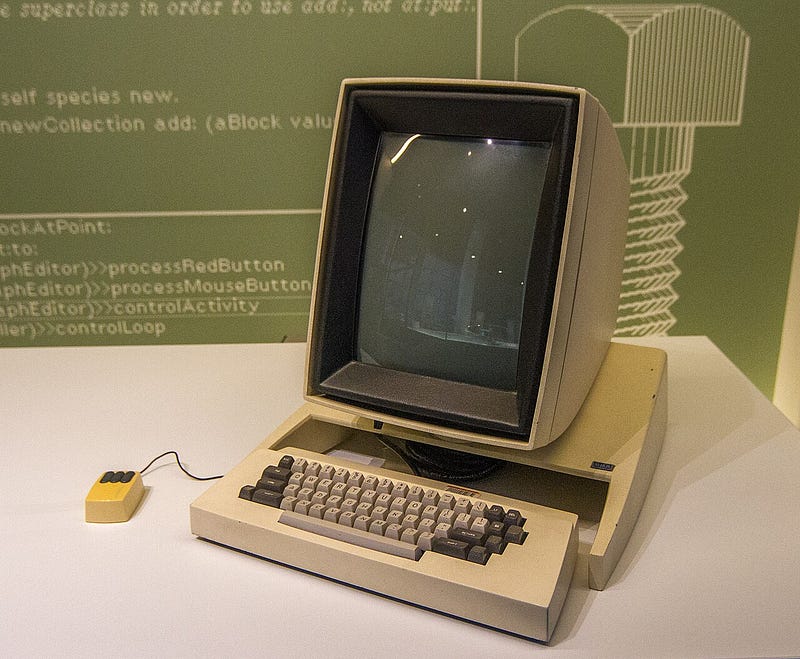
When I first traced the physical constraints of early local computer networks, I ran into a hard ceiling: on May 22, 1973, Bob Metcalfe sat at Xerox PARC and wrote an internal memo proposing a broadcast communications network. The document defined its scope in plain language: “specifically for in-building minicomputer communications.”
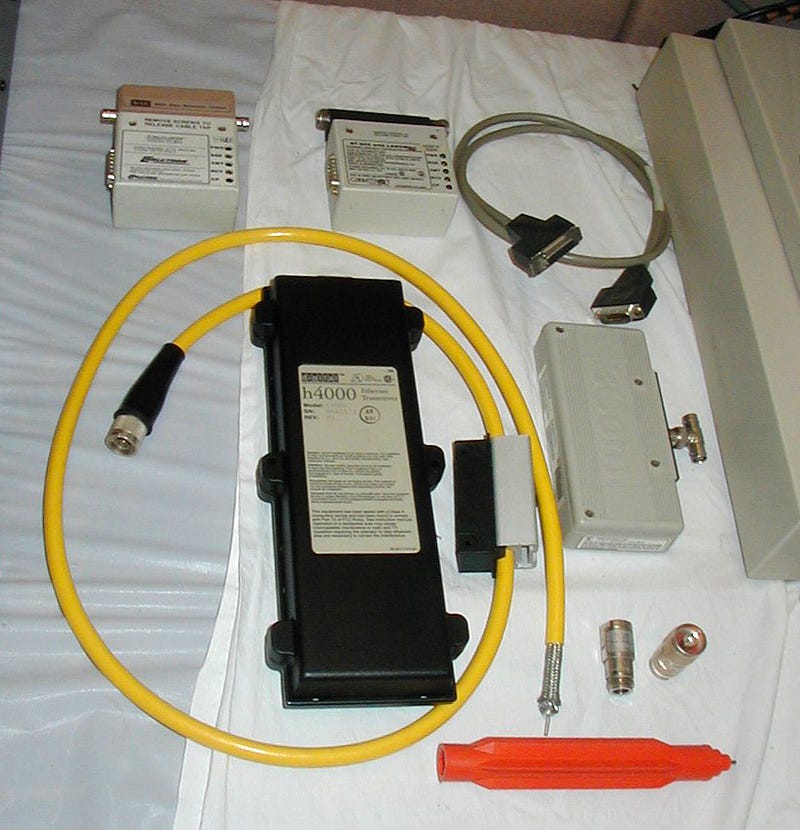
Metcalfe was wiring roughly 100 Alto personal computers and a newly invented laser printer down a single run of thick coaxial cable at 2.94 Mbps. The physical reach stopped at the building’s exterior walls because of signal attenuation and collision detection limits. It was an intentional trade-off, not a defect. Nobody planned for Ethernet to carry the weight of an interconnected planet.
Redundant links brought fatal broadcast storms
By the early 1980s, commercial computing blew past that single-building assumption.
Companies sprawled across multiple office buildings and campus facilities. Each department already ran its own local Ethernet. Nobody wanted to rip out functioning cables; everyone wanted a cheap mechanism to bridge separate segments into a unified network.
The hardware built for that job was the bridge. Digital Equipment Corporation (DEC) began shipping dedicated Ethernet bridges in 1984.
Early bridges had only two ports. The forwarding logic was simple: when a packet appeared on the left interface, the bridge checked its internal table, and if the destination lived on the right, it forwarded the frame. A single cable link between two networks ran cleanly. But real-world cables break, connectors loosen, and backhoes dig through conduits.
To guard against downtime, network administrators added a second physical cable as a backup path. If the primary link failed, the spare would take over.
That backup link triggered a catastrophic vulnerability in Ethernet.
Ethernet frames do not have a Time-to-Live (TTL) field like Layer 3 IP packets. Once an Ethernet frame enters a bridged network, it does not expire on its own. When two bridges formed a physical loop, a standard broadcast request — such as an ARP lookup — was forwarded out interface A, picked up by interface B, duplicated, and sent right back into interface A.
Within seconds, frames multiplied exponentially. Networks choked on their own echoes, bandwidth evaporated, and switch CPUs froze at 100%. Network engineers called this a broadcast storm.
The redundant wire added for reliability ended up bringing the entire system down.
DEC’s engineering dead end in 1985
In December 1985, DEC was designing a multiport bridge — the hardware that would become the LAN Bridge 100. Broadcast storms stood in the way of the product launch.
The hardware constraints were unforgiving:
The bridge hardware had only a few dozen kilobytes of memory. The algorithm could not maintain large state tables.
The system had to operate entirely decentralized. It could not assume any designated central controller existed on the wire.
Protocol overhead had to remain negligible so control traffic would not displace payload data. The system had to be plug-and-play, requiring zero manual configuration from busy network administrators.
Several senior engineers inside DEC considered the problem mathematically unsolvable: you could not permit arbitrary physical loops while guaranteeing an absolute absence of logical loops.
Perlman’s manager handed her the assignment and suggested she take a week of vacation while thinking it over.
A logical tree calculated over a weekend
Perlman skipped the vacation. Within a few days — with the core mechanics finalized over a single weekend — she delivered the complete algorithm.
Her solution became the Spanning Tree Protocol (STP).
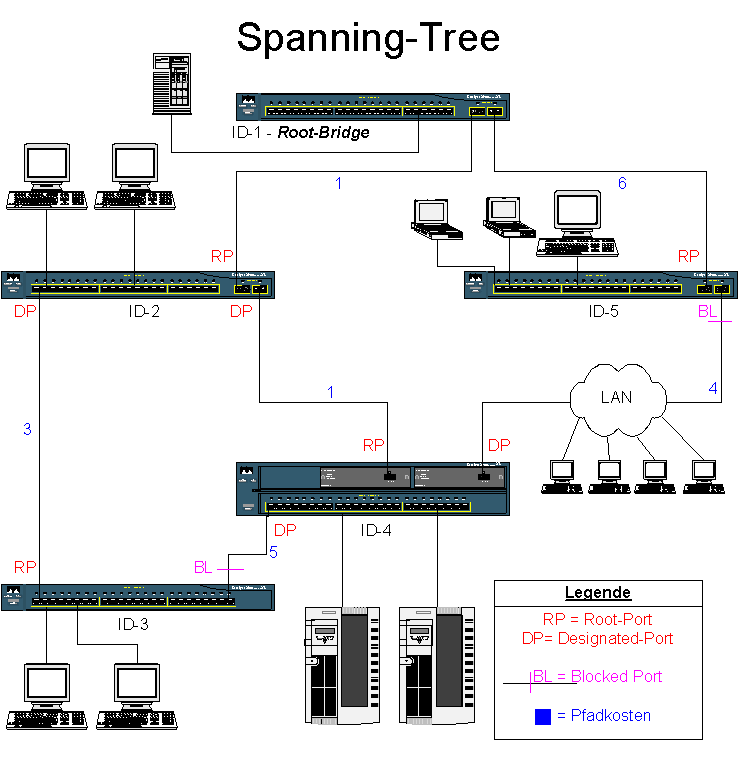
The bridges exchanged compact control packets called Bridge Protocol Data Units (BPDUs). Through distributed computation, the network elected the bridge with the lowest identifier as the “root bridge.” Every other node then calculated its shortest path back to that root. Finally, any redundant port that would form a cycle was placed in a logical “blocking” state.
Physical backup cables stayed plugged into the hardware, but software kept them silent. When an active link was severed and BPDUs stopped arriving, the blocked port woke up automatically within seconds to restore connectivity.
In 1985, Perlman published her paper, An Algorithm for Distributed Computation of a Spanning Tree in an Extended LAN, at SIGCOMM ’85. In 1990, the IEEE standardized the protocol as IEEE 802.1D. DEC embedded the logic into the LAN Bridge 100 the following year.
The algorithm removed the physical barrier that kept Ethernet pinned inside a single room. Networks scaled from a few dozen local machines to enterprise campuses carrying tens of thousands of endpoints.
When Perlman submitted the algorithm, she wrote a six-line poem summarizing the logic. DEC included the verses in the patent application, producing one of the few software patents on record containing a poem.
Default infrastructure hidden in plain sight
As multiport switches replaced early hubs and two-port bridges throughout the 1990s, STP became the default factory configuration across the telecom industry.
Virtually every modern network switch chip runs STP or one of its descendants in firmware.
Foundational infrastructure obeys an ironic rule: the more reliable an algorithm proves to be, the more completely it vanishes from public view.
Billions of packets cross bridged links every hour without looping into oblivion, but few developers outside core networking know who built that guarantee. Most programmers writing software today have never encountered the name Radia Perlman.
An unearned crown she refused to wear
When mainstream media rediscovered early network pioneers around the dot-com boom, journalists looked for figures to celebrate. They gave Perlman a catchy moniker: the “Mother of the Internet.”
Headlines loved the phrasing. Perlman rejected it.
Her refusal was not polite modesty; it was an engineer’s irritation with sloppy reasoning. Speaking to The Register, she dismantled the premise directly:
“It’s a title that one has no clear way of getting, unlike, for example, a Ph.D.”
She pointed out a reporter had inserted the phrase into an interview without showing her the draft, cementing a label she never requested.
In subsequent interviews, she was even clearer about why the title fails:
“It’s overreaching because I don’t think any single individual deserves credit for inventing the Internet.”
“Being called ‘Mother of the Internet’ is a little strange in that it emphasizes gender.”
The Internet is not a singular invention that sprang from an isolated epiphany. It represents decades of compromise, protocols, and hardware contributed by thousands of engineers. Claiming one person birthed it makes good copy, but it misrepresents how computer science works.
Perlman observed that if she had not designed the Spanning Tree Protocol in 1985, another engineer under the same constraints would have found a comparable mathematical solution soon after.
Dismantling her own masterpiece with TRILL
A scientist clinging to legacy would have defended STP as an untouchable monument. Perlman treated her invention like any honest engineer: she diagnosed its flaws and set out to replace it.
STP eliminated broadcast storms, but it carried a steep systemic penalty: wasted bandwidth.
To prevent loops, STP forces redundant physical paths to sit idle. In modern data centers with multi-tiered architectures, companies purchased expensive dual-switch uplinks only to watch half their physical cabling blocked from moving traffic.
As cloud computing expanded in the 2000s, east-west traffic between servers inside data centers exploded. STP’s slow convergence times and single-tree pathing became an unacceptable bottleneck.
Instead of protecting her original work, Perlman helped lead the IETF effort to design TRILL (Transparent Interconnection of Lots of Links).
TRILL brings Layer 3 link-state routing techniques (specifically IS-IS) down to Layer 2 networks. Rather than blocking redundant cables, TRILL runs traffic across every physical link simultaneously using equal-cost multi-pathing (ECMP), while preserving the plug-and-play simplicity of Ethernet.
She spent much of her later career engineering a way past the compromises she made in her thirties.
Engineering facts require no royal titles
From Metcalfe’s 1973 memo wiring 100 Alto minicomputers in Palo Alto to modern hyperscale switching fabrics, Ethernet’s growth is documented in engineering artifacts.
The record lives in whiteboards at DEC, the text of SIGCOMM ’85, the IEEE 802.1D specification, and the state machines running across millions of silicon chips right now.
Real engineering achievements are verified in the hardware, not in the rhetoric written around them.
The people who kept the world’s cables from catching fire need no royal titles to prove what they built.
References
- Metcalfe, R. “Ethernet: Distributed Packet Switching for Local Computer Networks”, Xerox PARC, 1973.
- Internet Hall of Fame: Responding to a Challenge with a World-Changing Invention
- Perlman, R. “An Algorithm for Distributed Computation of a Spanning Tree in an Extended LAN”, SIGCOMM ‘85.
- IEEE Standard 802.1D-1990: Media Access Control (MAC) Bridges.
- The Register: ‘Mother of Internet’ Radia Perlman favours central resources
- Silicon Valley Watcher: Intel’s Radia Perlman: Don’t Call Her “Mother Of The Internet”
- National Inventors Hall of Fame: Piano and Protocols — The Story of Inventor Radia Perlman
- IETF RFC 6325: Routing Bridges (RBridges): Base Protocol Specification (TRILL).
Support writers. All our nonprofit’s offerings here.
Click here to subscribe to the IT Chronicles newsletter.
Click for Wordsmith, Mystery Writing, Write Like Stephen King, more